High security · Georgetown
Safe Installation & Servicing in Georgetown
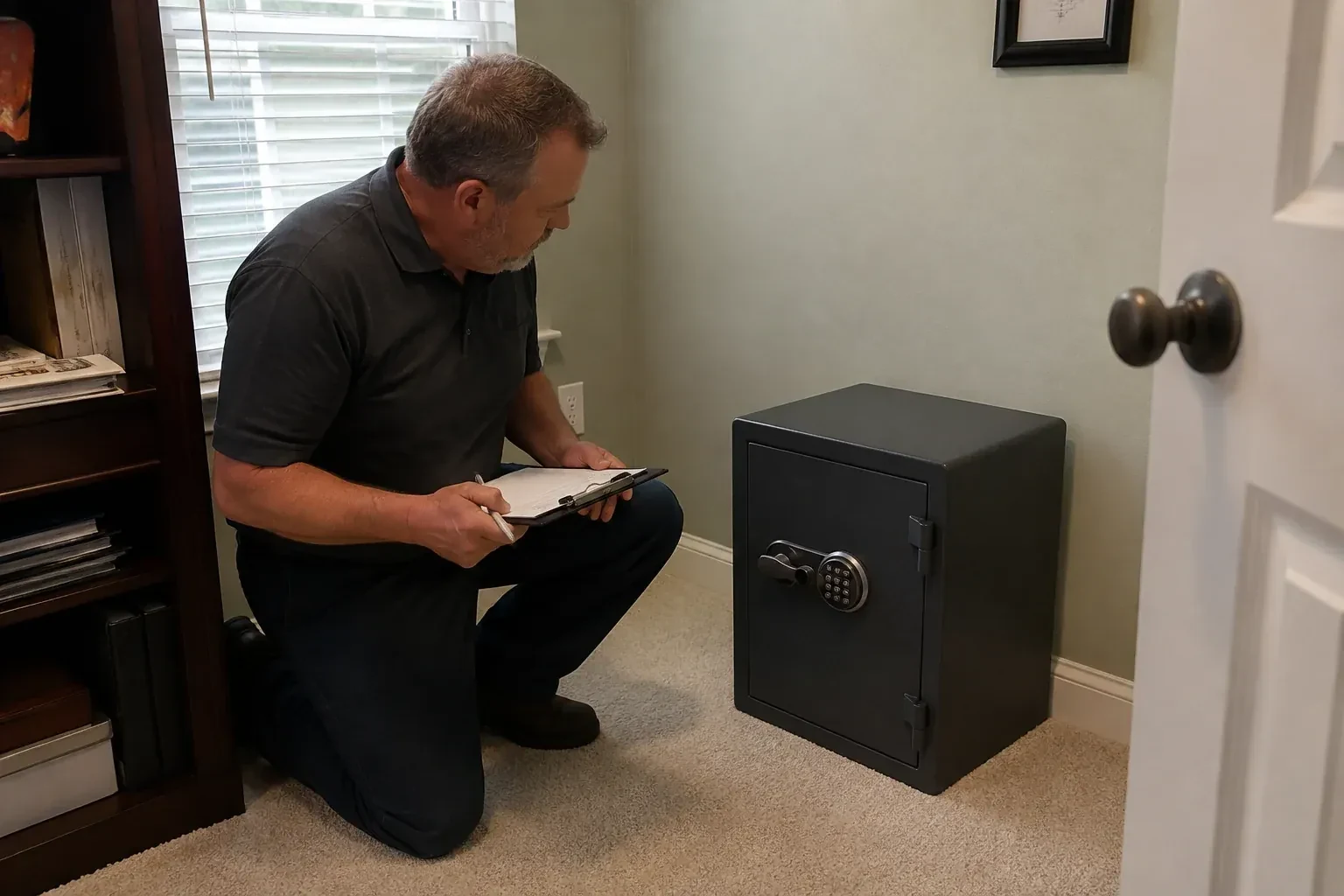
A homeowner inherited a heavy old dial safe from a parent's house, moved it into the new place, and has no idea whether the bolt-work still works, whether the lock is sound, or how it should be anchored.
Safe Installation & Servicing
In plain words
Relocating an existing safe is closer to a small structural project than a simple carry. The unit is unbolted, moved on proper equipment rather than dragged, and protected through doorways and stairwells that were never designed with several hundred pounds of steel in mind. At the new address the floor or wall construction is checked again from scratch, because a slab that held the safe at the old office may be entirely different from the one at the new address, and anchoring hardware is chosen to match rather than reused automatically.
How the visit goesThe accountant's office keeps a decade of client files in cardboard boxes because the only safe in the building is a small drawer safe meant for a laptop, nowhere near large enough for binders of paper.
Georgetown
How the visit goes
What the safe actually needs to hold
Before any hardware is chosen, the locksmith asks what will actually sit inside: cash from a till, jewelry, firearms, paper contracts, backup drives, or some mix of all of it. Each of those has a different enemy. Cash and jewelry are mainly at risk from tools and time, so a burglary rating matters most. Paper is mainly at risk from heat, so a fire rating matters most, and digital media needs a much lower internal temperature than paper to survive the same fire. Answering this question first is what keeps the rest of the visit from guessing.
Anchoring into a concrete floor
On a concrete floor, holes are drilled through the safe's pre-cut anchor points with a hammer drill and a masonry bit sized to the anchor hardware, and the dust is cleared from each hole so the anchor seats fully rather than on loose grit. Concrete anchor bolts are driven in and torqued to the hardware manufacturer's specification, tight enough to resist prying but not so tight that the anchor or the safe's own steel is stressed. The safe is tested afterward by hand to confirm it does not rock or shift.
Batteries that get changed before they fail
An electronic lock gives some warning before it dies, usually a beep or a flashing light during normal use, and treating that warning as a job to do that same week rather than eventually is what keeps a dead battery from turning into a locked-out morning. Keeping a spare battery of the correct type near the safe, rather than searching for one after the warning starts, closes the loop. The mechanical override key behind the keypad is worth keeping somewhere separate from the safe itself, not taped underneath it.
Safe Installation & Servicing
In the van
- Rated safe (burglary and fire)
- Wood subfloor lag bolts and washers
- Hammer drill and masonry bits
- Level and floor shims
- Concrete anchor bolts
What affects the quote
Same fees day, night or weekend
1Battery and accessory needs
An electronic lock needs a battery of the correct type on hand, and a fire-rated unit benefits from desiccant supplied at installation, both small additions to the visit.
2Condition of an existing safe
Rust on hinges, stiff or grinding bolt-work, a lock that hesitates, or anchoring that was never done all add work beyond a routine check on a servicing visit.
3Access route to the final position
Stairs, narrow doorways, tight corners, and whether an elevator or loading dock is involved all affect how the safe gets to its spot and how much handling that route requires.
Safe Installation & Servicing: questions
What is the difference between a mechanical dial lock and an electronic keypad?
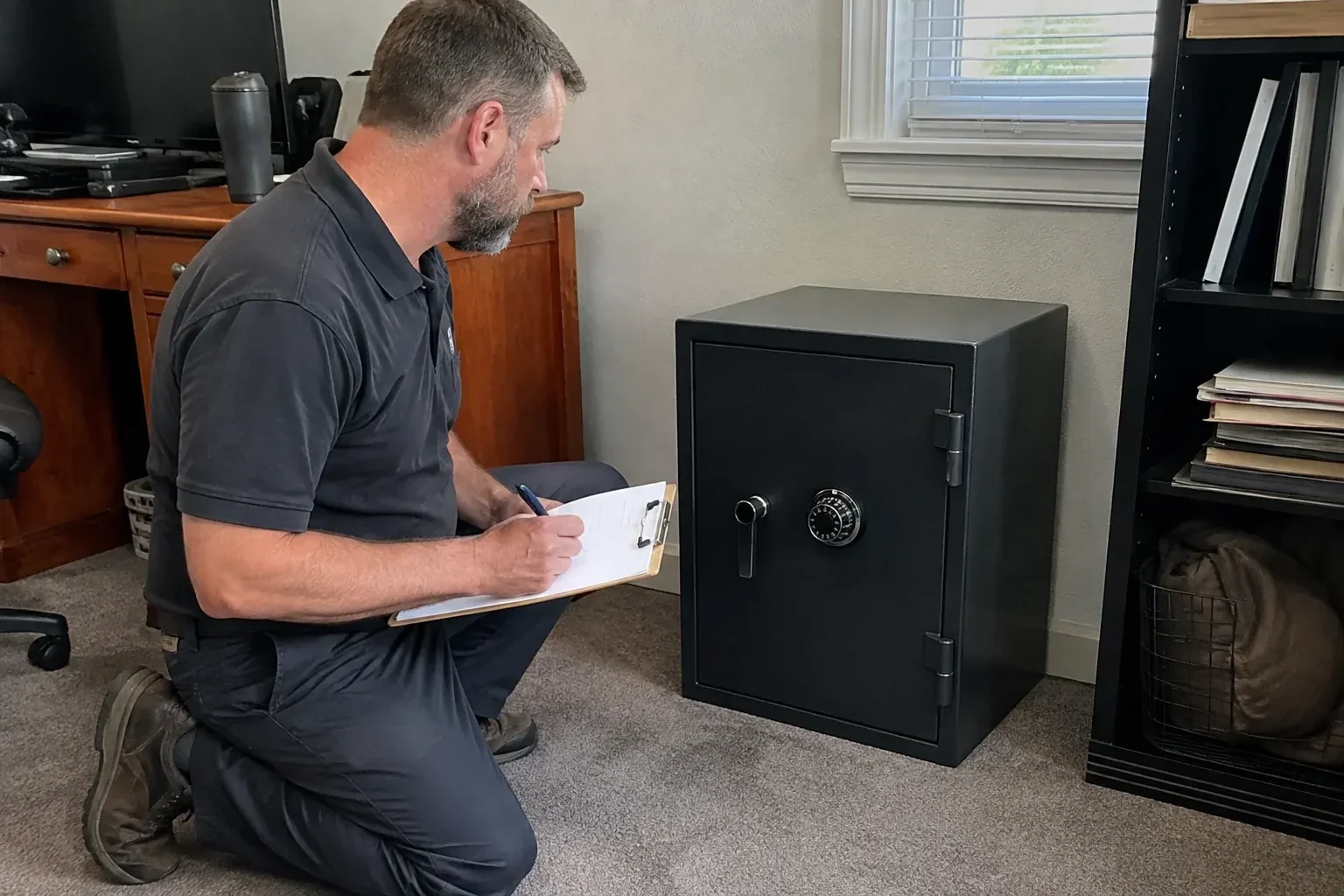
A mechanical dial has no battery and is set by hand to a private combination, turning through a sequence to release the bolt; it never runs out of power but takes a little practice to open. An electronic keypad accepts a numeric code and can support several separate codes for different people, but it depends on a battery that eventually needs replacing. Many owners choose based on how many people need access rather than one being simply superior to the other.
How do I know what rating of safe I actually need?
Start with what will be inside it. Cash, jewelry, and firearms mainly need protection from tools and time, so the burglary rating matters most. Paper records and digital backups mainly need protection from heat, so the fire rating matters most, and digital media needs a noticeably lower internal temperature than paper to survive. Many households and businesses end up choosing a unit built to both standards rather than picking just one.
How often does the battery need replacing on an electronic lock?
Most electronic locks give a low-battery warning, usually a beep or flashing light, well before they actually stop working, and replacing the battery within that same week is the safer habit rather than waiting. Depending on how often the safe is opened, a battery commonly lasts somewhere between one and several years, and keeping a spare of the correct type near the safe avoids a search once the warning starts.
High Security Locks
Safe Installation & Servicing near you
The services offered in Georgetown answer the questions a door eventually asks. Who else has a key? Why does the bolt drag? Would a stronger cylinder be worth it? Can staff leave without a key? How do I open the safe my father left? Each answer is on the pages below.