Change or rekey · Georgetown
Deadbolt Installation in Georgetown
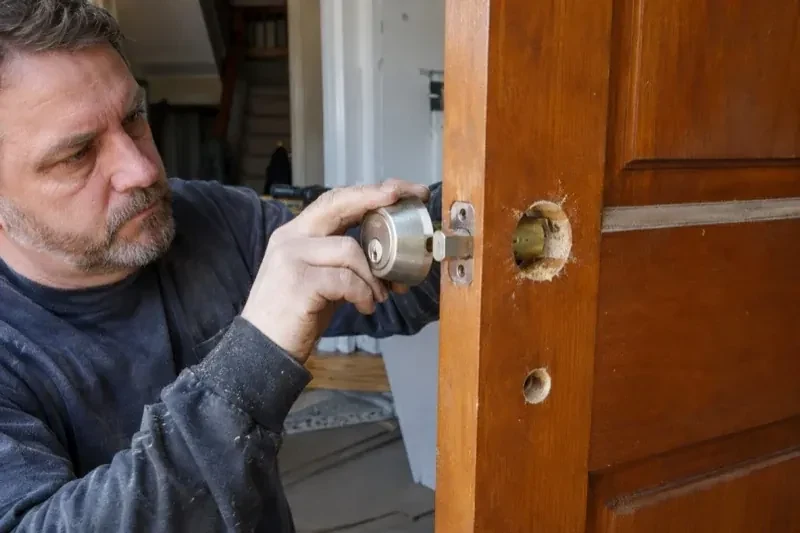
Someone tried the door last winter. The frame took it, but the strike plate is bent, one screw hole is stripped, and the bolt sits in the pocket at a slight angle.
Deadbolt Installation
In plain words
The right deadbolt for a door depends on how the door is used and where it sits. A front door that a family goes through twenty times a day needs a durable mechanism and a finish that shrugs off salt spray and sun; a side door in a laneway wants a heavy bolt and a strike that reaches the framing. Residential deadbolts carry letter grades for security, durability and finish, and heavier commercial-pattern bolts carry numbered grades, so there is a plain way to compare. The locksmith talks through those options, then fits the one you choose with the same care whichever grade it is.
How the visit goesThe door from the garage into the kitchen closes on a passage knob with no lock at all. Anyone who opens the garage is one turn of a handle from the house, and the insurance renewal form has a question about exactly that.
Georgetown
How the visit goes
Glass, sidelights and what is within reach
Glass changes the conversation about which deadbolt to fit. A pane in the door or a sidelight within an arm's reach of the lock means an inside thumb-turn could be reached by breaking the glass, which is why double-cylinder deadbolts are sometimes suggested. The locksmith measures the distance from the glass to the lock, notes whether it is tempered, laminated or plain, and lays out the options: a captive thumb-turn that needs a key only when you choose, a laminated pane or a tested security film that can delay an arm, or moving the bolt height. The aim is a door that keeps a stranger out and still lets everyone inside leave with one turn of the hand.
Setting a strike that reaches the framing
A reinforced strike or strike box is centred over the pocket, squared to the edge of the jamb, and its outline is scored and chiselled to a depth that leaves the plate flush. Pilot holes are drilled, and the two holes nearest the door stop take 75 mm screws that pass through the jamb and the shim space into the stud behind, with shorter screws in the remaining holes. The long screws are driven by hand for the last turns so the heads seat without crushing the jamb. Where the jamb is thin or has been split by an earlier attempt, a full-length jamb reinforcer is fitted under the strike instead.
Ready for a smart lock later
Because the door was prepared to the standard bore and backset, it suits many future options, though the model chosen later still sets its own bore, backset and thickness requirements. Keypad and app-controlled deadbolts fit the same 54 mm cross bore and the same edge bore as the mechanical lock fitted today, so upgrading later means swapping the hardware, not cutting the door again. The backset and bore measurements are written on the packaging left with you. If you want to think about a keypad down the road, ask the locksmith which models suit the door thickness and whether a backup keyed cylinder is worth having for the one day the batteries are flat.
Deadbolt Installation
In the van
- Single-cylinder deadbolt
- Sharp chisel and mallet
- Boring jig and 54 mm hole saw
- Rekeying pins and key blanks
- Reinforced strike plate
What affects the quote
Same fees day, night or weekend
1Rental and building requirements
Matching a building's keyway, providing keys to a landlord or fitting a lock that a condominium corporation specifies can add hardware or bench work, each shown as its own item.
2Storm door or restricted clearance
A tight storm door, a narrow lock stile or a decorative panel at bolt height can require low-profile trim or a shifted position, which is settled and quoted at the assessment.
3New bore or replacement into existing holes
Boring a door that has never had a deadbolt takes more time and tooling than dropping a new bolt into holes that are already there, and the quote reflects which of the two your door needs.
Deadbolt Installation: questions
How high above the knob does the deadbolt go?
The usual position is 140 to 150 mm above the centre of the knob, which lines the two locks up and keeps both within one reach. Manufacturers' templates assume that spacing, which helps a later keypad or handleset line up, though many handlesets still need their own lower hole drilled to that model's template. The height is nudged if it would land on glass, a decorative panel or a hollow spot inside an insulated door, and to make sure the frame behind it is solid.
What do lock grades mean when I am picking a deadbolt?
Residential deadbolts are graded under an industry standard in three categories, security, durability and finish, with letter grades from C through A, so a lock marked with three A grades has met the highest level in each. Heavier commercial-pattern bolts are graded 1, 2 or 3, with 1 the highest. The grades let you match hardware to a busy family door or an exposed side entrance without relying on the weight of the box.
Do I need a deadbolt on the door from the garage into the house?
It is worth having. The door between an attached garage and the living space is in practice often the softest way in, since a garage door left open leaves a passage knob as the only barrier. A thumb-turn deadbolt there costs a few minutes a day and closes that gap.
Change or Rekey Locks
- Lock Replacement & UpgradeEvery morning the front door key needs the same little dance: push in, lift, wiggle, turn.
- Vintage Mortise Lock ServiceSomeone painted the door years ago without removing the hardware.
- Smart Lock InstallationThe rental turns over every few months and each time you drive across town to swap keys, then…
Deadbolt Installation near you
The services offered in Georgetown answer the questions a door eventually asks. Who else has a key? Why does the bolt drag? Would a stronger cylinder be worth it? Can staff leave without a key? How do I open the safe my father left? Each answer is on the pages below.