Car keys · Halton Hills
Transponder Key Programming
The blade snapped off flush with the door lock last winter, and the shop that cut a replacement only matched the metal shape. The fob still locks and unlocks the doors from across the driveway, but the engine cranks over and over without ever catching.
Transponder Key Programming
In plain words
When every key for a vehicle is genuinely gone, there is nothing left to vouch for a new one, so the visit starts by re-establishing secure access to the immobilizer's own module, sometimes through the vehicle's manufacturer network. Only once that access is confirmed can a fresh key be cut and its chip written in. It takes longer than adding a spare with an existing key on hand, but it follows the same underlying logic and finishes with the same test: an engine that starts on the new key alone.
How the visit goesThe new key slides into the ignition and turns exactly the way the old one did, but the engine only cranks. A dashboard light blinks near the fuel gauge, and no amount of turning the key gets the car past that cranking sound.
Halton Hills
How the visit goes
How the vehicle's key list is reached
Some vehicles let a locksmith see and edit the key list directly once a diagnostic tool is connected to the onboard port. Others hide that list behind a manufacturer security session that has to be established first, particularly on newer models with more layers between the port and the immobilizer itself. Knowing which situation applies before starting sets the right expectation for how the visit will unfold, and for all-keys-lost work it decides whether the first step is reached directly or has to be built from nothing.
Programming through the diagnostic port
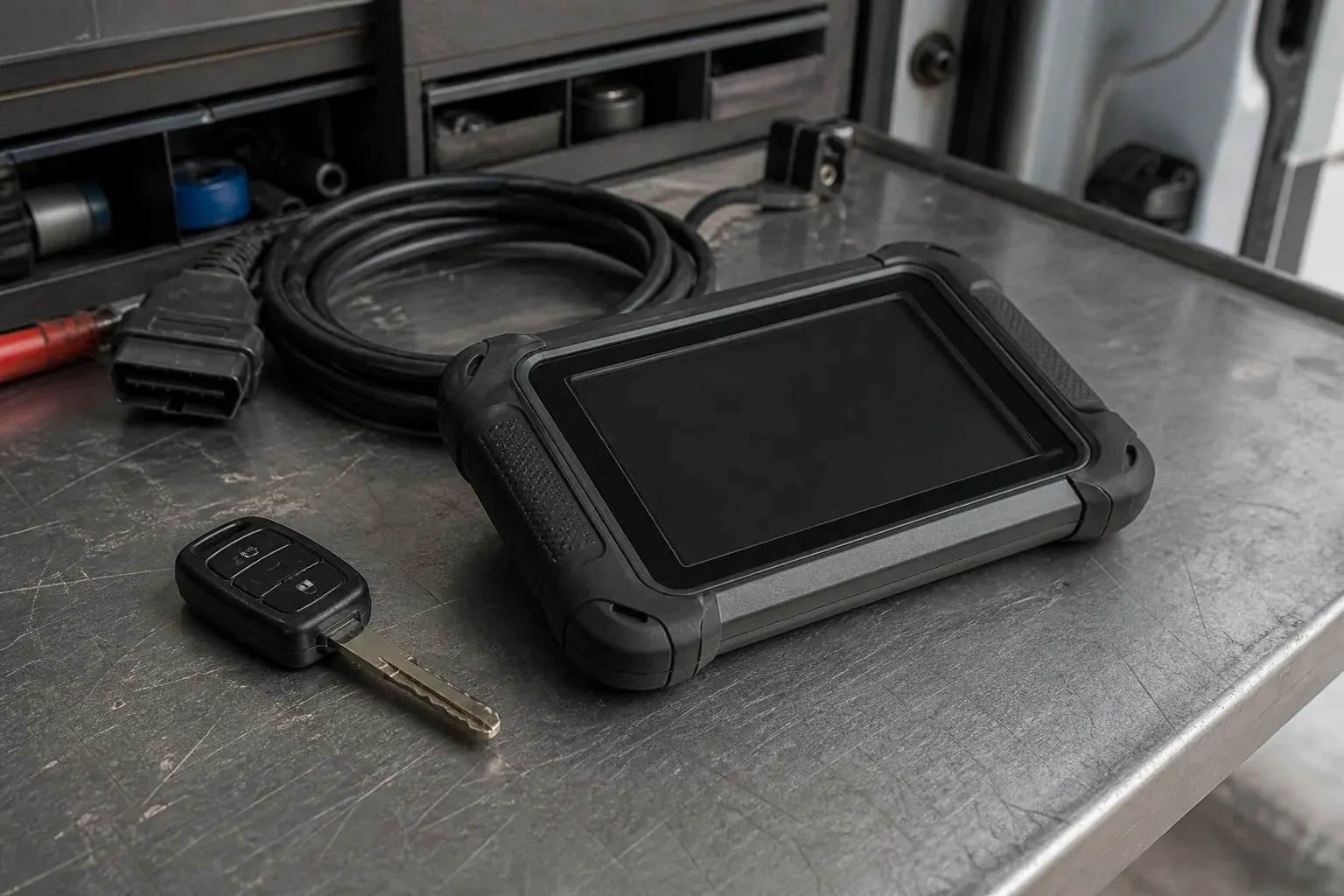
On most vehicles, the new chip's identity is written into the immobilizer through the onboard diagnostic port using equipment built for that vehicle's own protocol. The programmer talks to the vehicle's module in its own language, adds the new key without erasing the others unless asked, and confirms the write was accepted before the tool disconnects. This is the routine path for a spare, an extra key, or a straightforward replacement where at least one working key is still available to authorize the addition.
Looking after the chip
The chip inside a key head has no moving parts and asks for very little, but it does not tolerate being separated from the blade by force. A key that gets bent, snapped, or pried at with tools meant for a different job can lose its chip along with its shape, and a chip cut in half no longer answers anything. Carrying the key on a ring rather than loose in a pocket, and keeping it away from repeated hard impacts, is most of what looking after it involves.
Transponder Key Programming
In the van
- Fob battery
- OBD-II key programmer
- Key cutting machine
- Replacement remote-head fob
- Emergency insert blade
What affects the quote
Same fees day, night or weekend
1Fob battery or housing replacement
A fob with a failing battery, cracked buttons, or a worn housing may need that hardware replaced alongside the programming, which is identified during the initial check of the key rather than assumed either way.
2Any extra function added to the new key
Pairing remote entry, trunk release, or proximity walk-up functions onto a new key is additional work beyond the immobilizer chip alone, and each function is confirmed working before the visit is considered finished.
3Age and availability of the correct blank or chip
Older or less common vehicles sometimes use a blank or chip family that takes longer to source, particularly for a model that has been out of production for some years, which affects how the visit is scheduled.
Transponder Key Programming: questions
How many keys can one vehicle hold in its memory?
It varies by make and model; some systems hold only a handful of identities, while others allow considerably more. Many vehicles let one working key on hand authorize adding another, though some ask for two working keys and others use a different programming route entirely, which is why all-keys-lost situations are handled differently from adding a spare or a second driver's key.
My key turns and the engine cranks, but it won't start. Is that this?
That pattern, the starter turning the engine over without it catching, often points to the key or immobilizer rather than a fuel or ignition-timing fault. A flashing security light on the dashboard while this happens adds to that picture. A diagnosis, checking whether the vehicle actually recognizes the key's chip, is what confirms which one it is before any programming begins.
What's the difference between a transponder key and a key fob?
The transponder is the passive chip that talks to the immobilizer and lets the engine start; it needs no battery of its own. The fob is the separate, battery-powered piece that handles remote locking, unlocking and alarm functions. Many modern keys combine both in one housing, but they answer two different systems, which is why a fob with a dead battery can still start the car with its mechanical blade.
Car Keys
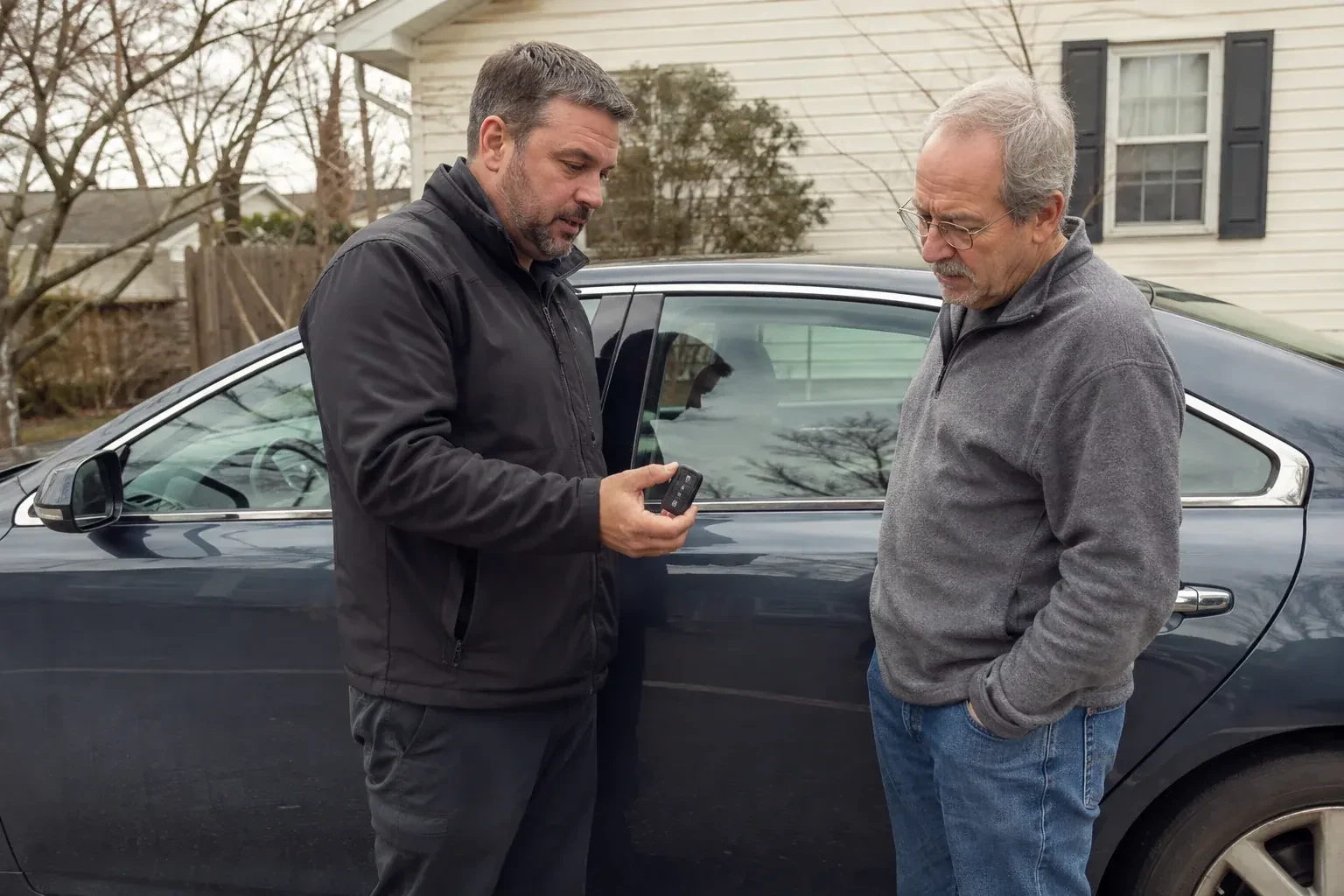
- Car Key ReplacementThe key snapped at the head while you were turning it in a stiff, frosty door lock.
- Spare Car Key DuplicationA teenager just passed a driving test and reasonably wants a key of their own rather than…
- Key Fob ProgrammingA cracked case or a spin through the wash left the fob unresponsive, and opening it up reveals a…
Transponder Key Programming near you
The pages that follow describe the lock services offered in Halton Hills one by one, without sales talk. Where a service has a simpler or less involved cousin, the page says so. Where a repair will do instead of a replacement, the page says that too. The aim is for you to choose well, not to choose more.