Commercial · Glen Williams
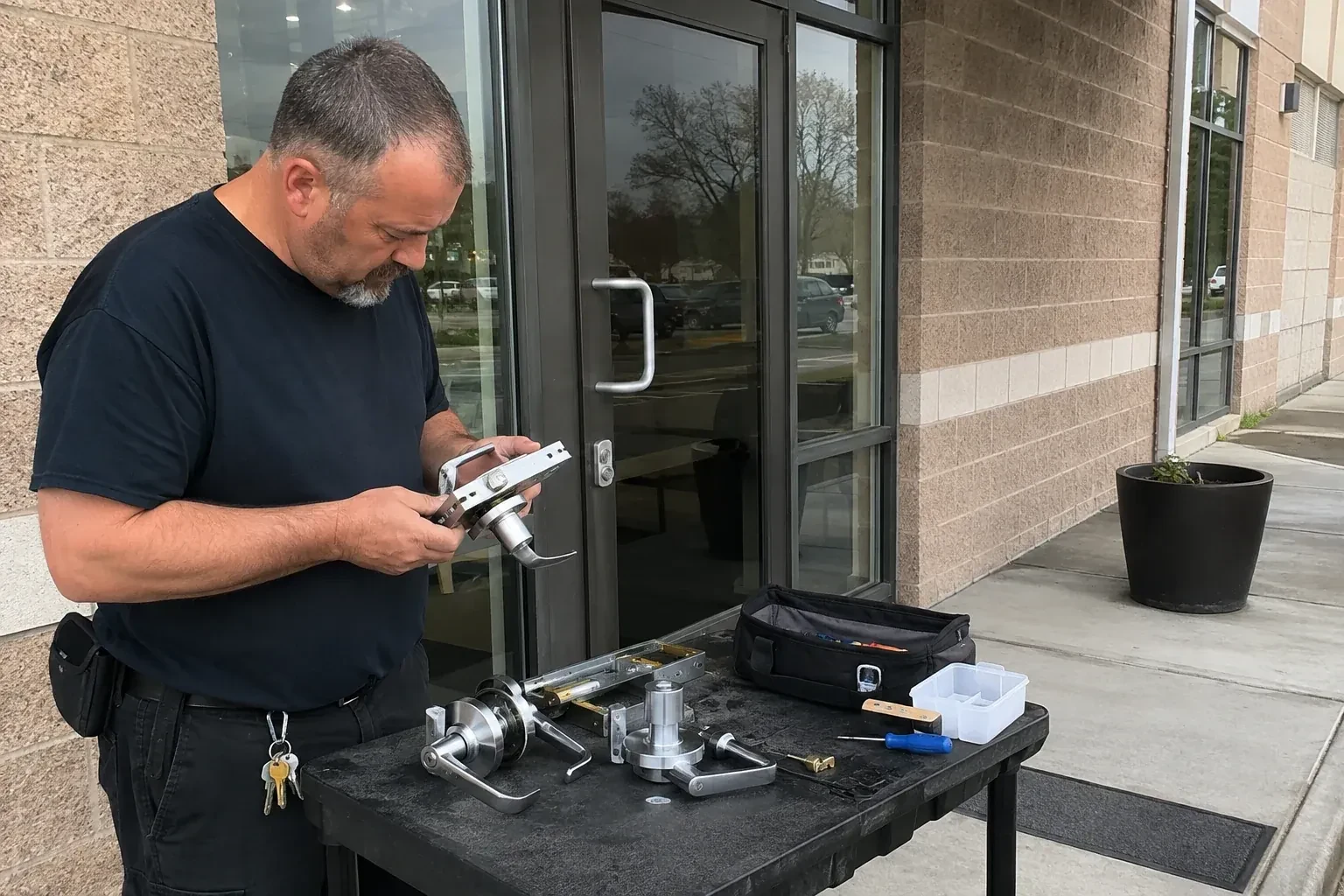
Commercial Rekeying in Glen Williams
The drawer behind the counter holds a tangle of keys with tape labels: front old, side, Dave. Some open things, some open nothing, and the hardware-store copies mean the true count drifted long ago past anything written down.
Commercial Rekeying
In plain words
Taking over a commercial unit is the moment to make the locks yours. The keys handed across at signing are only the ones the previous occupant remembered; cleaners, suppliers and former staff may still carry others. Rekeying every cylinder your lease gives you control of gives you a clean start on day one, with keys cut for your team and a chart of which door each one opens. The locksmith also clears up the odds and ends that come with a new lease: a padlock with no key, a mailbox lock seized since the last tenant. You open knowing exactly who can get in.
How the visit goesThe manager's key ring went missing somewhere between the bank and the car, and the master on it opened every door in the building. Until the cylinders are changed, whoever finds it is holding the run of the place.
Glen Williams
How the visit goes
Choosing the window and the order of doors
The last part of the assessment is practical: when can the work happen, and in what order. A retail shop may prefer the hour after closing; a restaurant, the mid-morning lull; a warehouse, the gap between the last outbound truck and the night shift. The locksmith also asks about deliveries, the cleaning crew, the alarm monitoring company and anyone else who holds a key and needs a new one before their next visit. From this comes a sequence, typically the doors staff use least first and the main entrance last, so there is always a working, lockable way in and out while the cylinders are being changed.
Swapping interchangeable cores
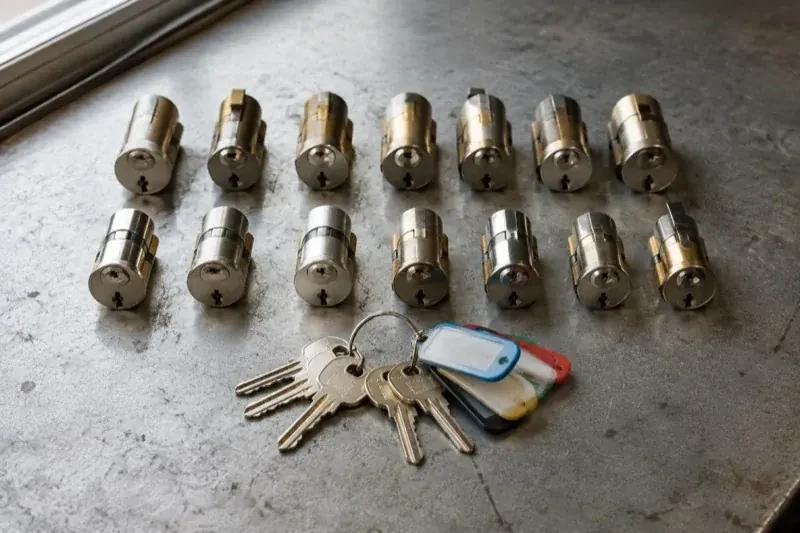
Where the business already runs on interchangeable cores, the door hardware never comes apart. The control key goes into the figure-eight core, turns a few degrees, and the whole core slides out of the lever or padlock in one piece. A freshly combinated core goes in the same way, the operating key is tried, and that door is done. The old cores travel back to the bench to be repinned for another opening or held as spares. This is what makes cores so well suited to businesses with steady turnover: a single control key, kept in the manager's safe rather than on a ring, is all it takes to change a lock.
How copies get made from now on
If the business moved to a restricted keyway, the way keys are copied has changed for good. Hardware stores and kiosks do not stock the blanks, which makes running off a spare on a lunch break far harder to arrange. New keys are ordered from the locksmith by one of the people named on the authorization letter, who signs for them, and the register grows by exactly that many. On a standard keyway, the same discipline is kept by habit: the manager orders keys, the register records them and a key that turns up unlisted prompts a question. Either way the count on paper and the count in the world stay the same, which is what key control means.
Commercial Rekeying
In the van
- Key stamp set and tags
- Cylinder removal and spanner tools
- Mortise cylinder set screws and cams
- Standard and restricted key blanks
- Master pins
What affects the quote
Same fees day, night or weekend
1Doors out of alignment
A door whose cam, strike or closer needs adjusting so the freshly rekeyed cylinder throws the bolt fully is corrected during the visit, and that adjustment is a separate item.
2Several locations
Rekeying two or three sites onto one keying plan means travel between them and a chart that spans buildings, quoted per site plus the shared design work.
3Number of cylinders
The count of openings drives the quote more than anything else: each cylinder is removed, repinned, refitted and tested individually, so a three-door shop and a twelve-office suite are very different jobs.
Commercial Rekeying: questions
Do I need my landlord's consent before rekeying my unit?
Read the lease, because that is where the answer lives. Commercial tenancies are governed mostly by the lease itself, and many leases require the tenant to tell the landlord when locks change, to provide a key for emergencies, or to use the landlord's approved locksmith. Doors on the building's master system, such as corridor or service doors, are normally the landlord's to change. Bring the lease to the assessment and the locksmith will sort the doors accordingly.
What is the difference between rekeying a business and replacing its locks?
Rekeying keeps every lock on the door and changes only the pins inside the cylinder, so a new key works and the old ones stop. Replacing swaps the hardware itself. Commercial cylinders are made to be repinned many times, so rekeying suits any lock in sound condition and leaves the levers, trim and door untouched. Replacement is chosen door by door for cylinders that are worn, corroded or too light for what they protect.
What happens with our fire exit doors and panic bars?
The outside cylinder on an exit door controls entry only, and it can be rekeyed like any other. The inside stays as it must: one push or one turn, no key, no special knowledge, on the exit door itself and on any door on the way to it. A locksmith will not add a keyed device to the inside of an exit, and will point out one if it already exists.
Commercial Locks
- Access Control InstallationYou just leased the empty unit next door and want the new tenant to open their own suite without a…
- Panic & Exit HardwareTwo doors used to swing as a pair at the community hall entrance, but one leaf has started closing…
- Commercial-Grade Lock ReplacementThe key to the office entrance turns with almost no resistance now, and some mornings the deadbolt…
Commercial Rekeying near you
Whether you own a home in Glen Williams, run a shop or manage a few rental units, the lock services here are organised the way people actually ask for them. Start with the problem you have today, and read on to see what else on the door might deserve a look while a locksmith is already there.