Change or rekey · Boston
Vintage Mortise Lock Service in Boston
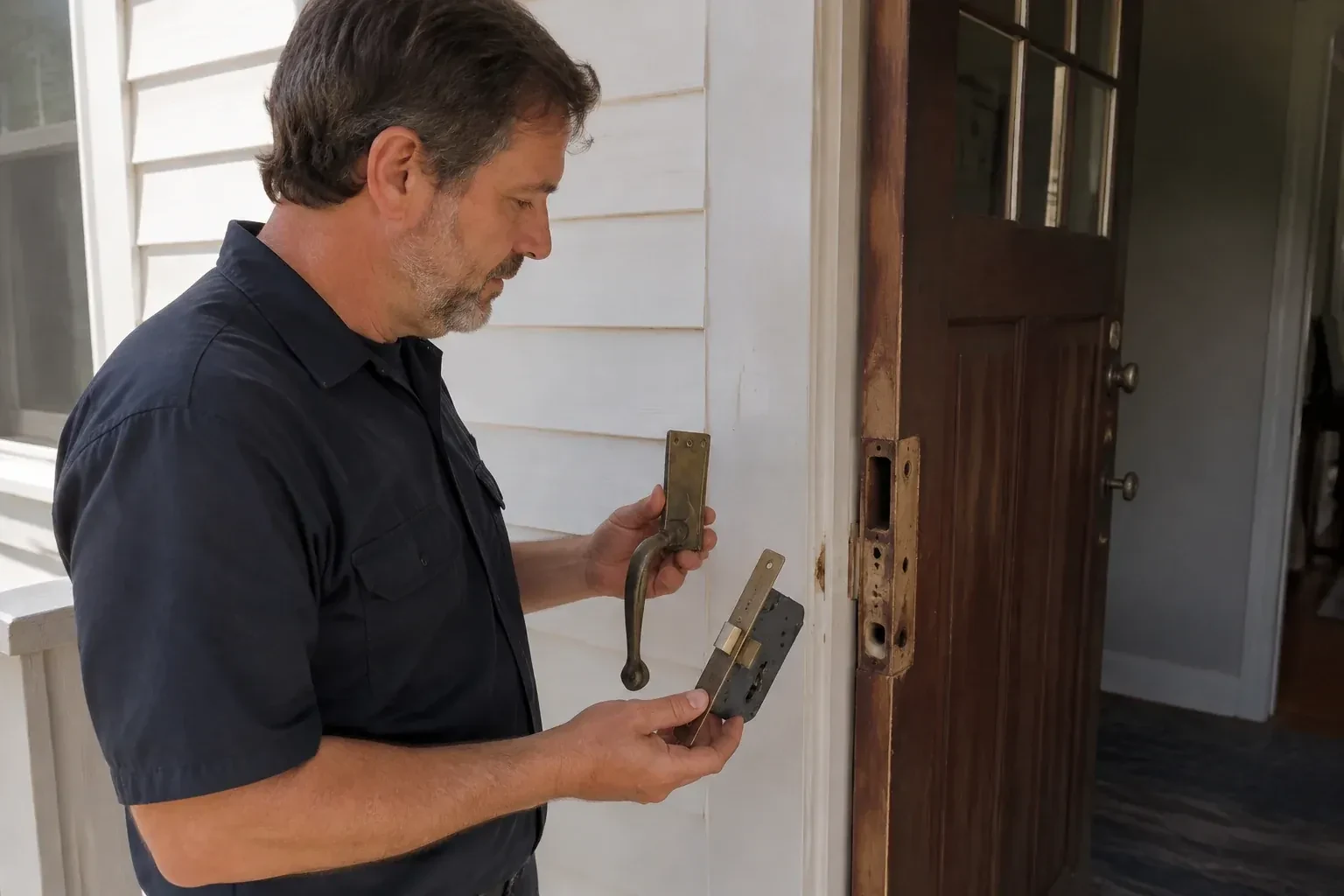
Someone painted the door years ago without removing the hardware. The faceplate, the strike and the little thumb-turn are all under several coats, the deadbolt scrapes when it moves, and the knob is stiff enough to leave marks on your hand.
Vintage Mortise Lock Service
In plain words
Most old mortise locks fail for boring reasons. A coil spring that has been compressed a hundred thousand times since the house was built finally breaks, or the grease inside the case dries into something like wax and the levers stick in it. Neither justifies cutting a new hole in a solid oak door. The service opens the case, cleans out the old lubricant, replaces the springs with the right size, matches any worn follower or lever and lubricates the mechanism lightly. The same case goes back into the same pocket, and the knob returns to level with the crisp snap it had decades ago.
How the visit goesThe interior bedroom doors on the second floor have the original mortise latches, and none of them close any more. The doors drift open, the small brass turn buttons do nothing, and the keyholes have been empty for as long as anyone can remember.
Boston
How the visit goes
Who owns the door
The first check has nothing to do with the lock. The locksmith confirms that the person asking for the work owns the home or lawfully lives in it, since a serviced lock and a freshly cut key are, in the end, a way into someone's house. Photo identification and something tying you to the address usually settles it in a moment. On a rental, the landlord and the tenant are expected to agree on lock changes and share keys, so the locksmith asks who should hold the new bit keys or cylinder keys and notes it. This small formality protects the household as much as anyone, and it is done before a screwdriver comes out.
Cutting a bit key to the lock
For a bit-key lock, keys are made to the case rather than copied from a pattern. A blank with the right bow, shank and bit size is chosen, then the bit is filed by hand to clear the wards inside the case and to lift each lever to the correct height. The key is tried, marked, filed again and tried again until it turns the bolt cleanly from both sides. A second key is made to match while the first is fresh. Where a working original exists, it is used as a guide and the new key is cut to it, and a worn original can itself be gently restored if the customer wants to keep using it.
How to lubricate it, and how not to
A serviced mortise case wants very little. Once a year, a single drop of light lock oil into the latch and the bolt from the door edge, with the faceplate screws briefly backed off if needed, keeps the levers gliding. If the lock has a pin-tumbler cylinder, that cylinder gets dry graphite or a PTFE lubricant in the keyway instead, because oil in a cylinder gathers grit and stiffens the pins. General-purpose spray lubricants belong nowhere on this hardware; they flush out the little oil that should stay and leave a film that dust settles into. The locksmith will show you where the drop goes so you are not guessing.
Vintage Mortise Lock Service
In the van
- Deadbolt lever springs
- Latch and hub springs
- Bit key blanks
- Hardwood dowel and wood glue
- Reproduction mortise case
What affects the quote
Same fees day, night or weekend
1Replacement cylinder
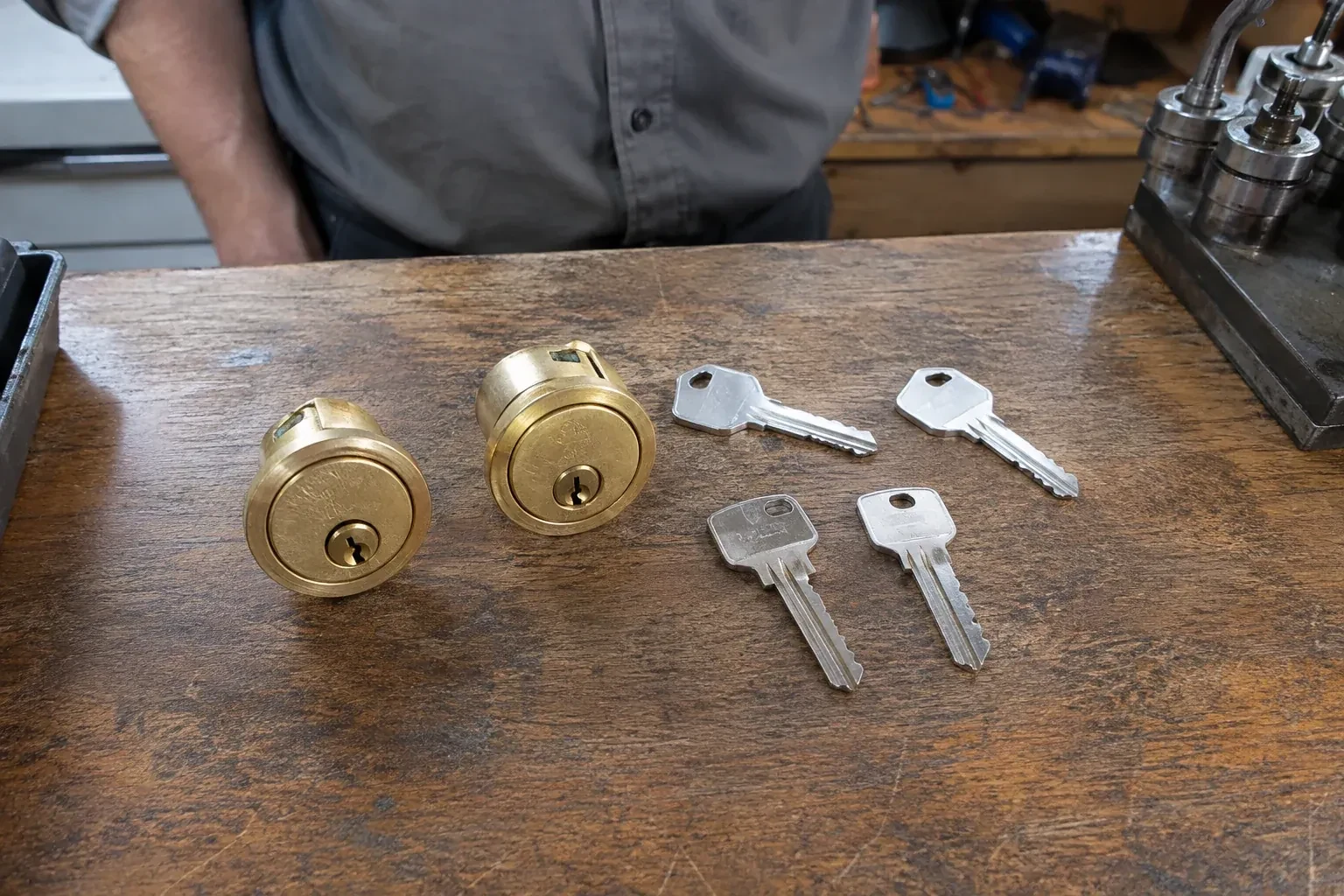
When a pin-tumbler cylinder is past rekeying, a new mortise cylinder of the right thread and cam is fitted. A standard cylinder and a high-security one are different hardware and are quoted as such.
2Paint and seized parts
Hardware buried under decades of paint takes time to free and clean without damage. A faceplate, strike and thumb-turn that have to be stripped back add to the visit and are noted in the quote.
3Parts that must be ordered
A reproduction case or an unusual cylinder size may have to be ordered to measurement, which means a second visit to fit it. The quote separates the first visit from the return.
Vintage Mortise Lock Service: questions
Can my interior doors be serviced too, and can one key work all of them?
Usually yes to the first, and to the second once the locksmith checks the locks. Interior mortise latches with privacy turn buttons are lighter versions of the entry lock and respond to the same clean and re-spring. Interior locks in a house were sometimes supplied to one bit key, and where the key sections, warding and levers actually match, the locksmith can restore that arrangement so a single key opens several bedroom and bathroom doors. It is a practical thing to have when a child locks a bathroom from inside.
Why does the deadbolt scrape or need a shove to throw?
Two causes cover most cases. Either paint has built up on the faceplate, the bolt or the strike so the bolt drags across it, or the door has dropped so the bolt is entering the strike pocket at an angle and rubbing its edge. Occasionally a bent deadbolt lever inside the case adds friction. Cleaning the paint back, adjusting the strike and checking the lever all happen as part of the service.
What does the service visit involve, step by step?
The locksmith checks your authority to request the work, examines the door and lock, and tells you what it needs. The knobs, plates and cylinder come off, the case slides out of the door edge and is opened on a bench, cleaned, re-sprung and repaired. Keys are made or the cylinder rekeyed, the door pocket is tidied, everything goes back on, and the strike is adjusted. You test the finished lock from both sides.
Change or Rekey Locks
Vintage Mortise Lock Service near you
This is the working list of services for Boston: the jobs a locksmith gets asked to do week in and week out. Lockouts and broken keys. Rekeys and lock changes. Deadbolts, high-security cylinders and smart locks. Commercial hardware and master key systems. Safe opening. And key cutting, house and vehicle alike.